
Non-DCR Solar Panels Banned in India? The Truth, The Myths & Everything in Between
6/5/20266 min read
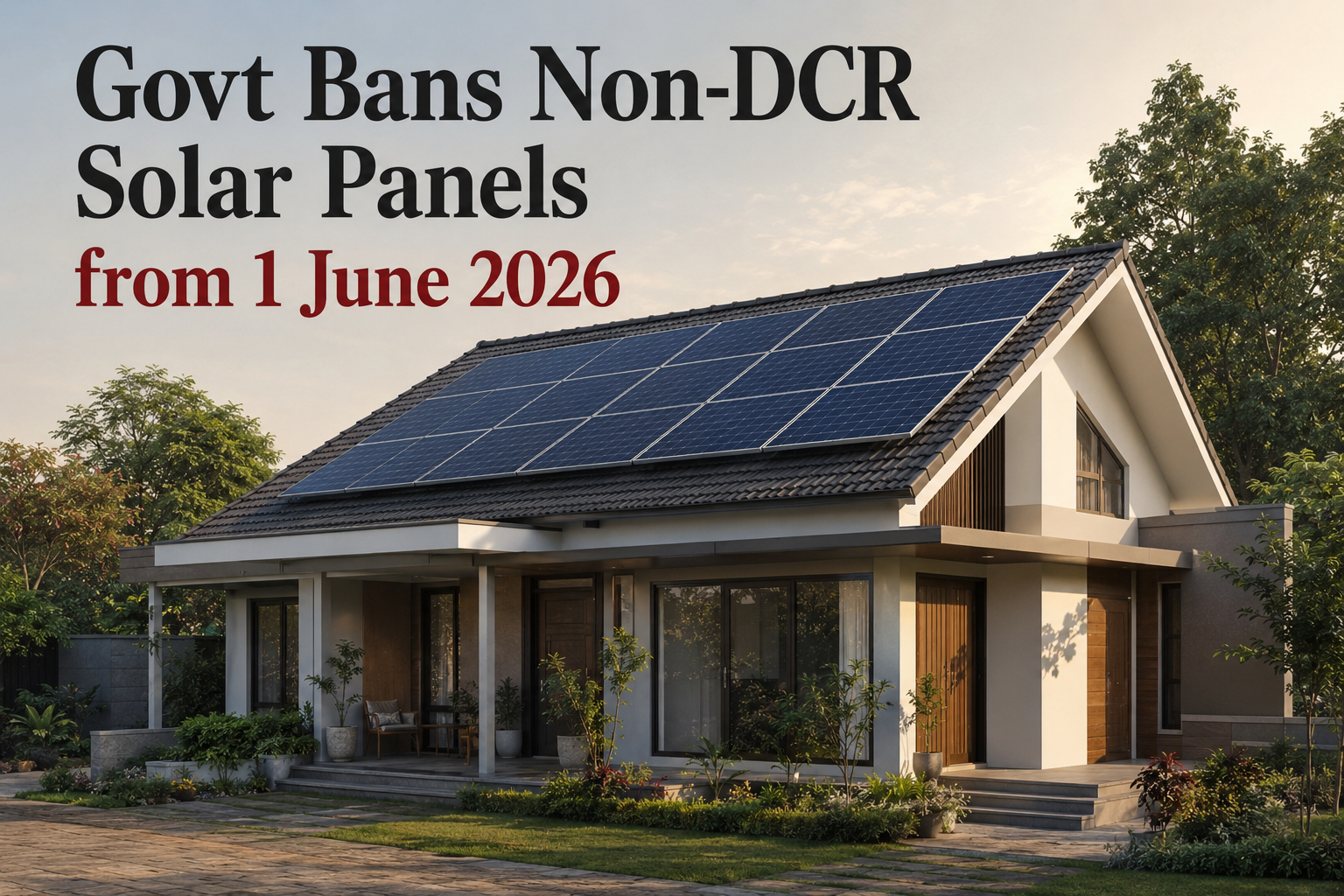

The Indian solar industry has witnessed remarkable growth over the last decade. With rising electricity costs, increasing environmental awareness, and strong government support, solar energy has become one of the most preferred sources of clean power across the country. However, with this rapid growth comes a lot of confusion, especially around policies and regulations.
One topic that has recently generated significant discussion is the status of Non-DCR solar panels in India. Many businesses, homeowners, and solar investors have heard claims that Non-DCR solar panels are banned in the country. These statements have created uncertainty among buyers who are planning to invest in solar energy systems.
But is it true? Have Non-DCR solar panels really been banned in India? Or is this simply a misunderstanding of government regulations?
In this article, we will uncover the truth, separate facts from myths, and explain everything you need to know about Non-DCR solar panels and their role in India’s solar energy landscape.
Understanding DCR and Non-DCR Solar Panels
Before discussing whether Non-DCR panels are banned, it is important to understand what DCR and Non-DCR actually mean.
DCR stands for Domestic Content Requirement. Solar panels categorized under DCR are manufactured using solar cells and modules produced within India. These panels support the government’s objective of strengthening domestic manufacturing and reducing dependence on imports.
Non-DCR solar panels, on the other hand, are typically manufactured using imported solar cells or modules. Many of these panels come from countries with highly developed solar manufacturing industries and are widely used around the world.
The distinction between DCR and Non-DCR panels is mainly related to government procurement policies and project eligibility criteria rather than the quality or efficiency of the solar panels themselves.
The Main Point: Are Non-DCR Solar Panels Banned?
The simple answer is no.
Non-DCR solar panels are not completely banned in India. The confusion arises because certain government-supported projects and schemes require the use of DCR-compliant solar modules. In such cases, developers and beneficiaries must use domestically manufactured panels to qualify for subsidies, incentives, or project approvals.
However, this requirement does not mean that Non-DCR solar panels are illegal or prohibited across the country. In many private, commercial, and industrial solar projects, Non-DCR panels continue to be used legally and effectively.
The reality is that government policies are designed to encourage domestic manufacturing, not necessarily to eliminate imported solar technologies altogether.
Why Did the Ban Rumors Start?
The rumors largely originated after several policy announcements aimed at boosting India’s solar manufacturing ecosystem.
The Indian government introduced measures such as the Approved List of Models and Manufacturers (ALMM), Production Linked Incentive (PLI) schemes, and domestic procurement mandates for specific projects. These initiatives encouraged the use of Indian-made solar modules in government-backed installations.
As these regulations gained attention, many people interpreted them as a complete ban on imported or Non-DCR panels. In reality, the regulations were targeted at specific project categories rather than the entire solar market.
Misinterpretation of policy updates by industry observers, social media discussions, and incomplete information further fueled the misconception.
What is ALMM and Why Does It Matter?
The Approved List of Models and Manufacturers (ALMM) plays an important role in India’s solar sector.
ALMM is a list maintained by the government that includes approved solar module manufacturers meeting specific quality and performance standards. Certain government projects and procurement programs require developers to use modules from this approved list.
The objective is to ensure quality, reliability, and support for domestic manufacturing capabilities.
Many people mistakenly associate ALMM regulations with a blanket ban on Non-DCR products. However, ALMM compliance and DCR requirements are separate policy mechanisms, each serving different objectives within the solar industry.
Impact on Residential Solar Installations
For homeowners planning to install rooftop solar systems, the situation is generally straightforward.
Most residential consumers are free to choose solar solutions that comply with applicable local and national regulations. The selection often depends on budget, efficiency requirements, warranty terms, and installer recommendations.
A reputable installer will help homeowners understand which modules are suitable for their specific project and whether any subsidy-linked requirements apply.
This is why working with the Best solar company in Ahmedabad becomes crucial. Experienced solar providers stay updated with changing regulations and can guide customers toward compliant and cost-effective solar solutions without unnecessary confusion.
Impact on Commercial and Industrial Projects
Commercial and industrial solar projects often operate under different considerations compared to residential installations.
Businesses focus heavily on return on investment, energy generation performance, and long-term operational savings. In many cases, project developers evaluate both DCR and Non-DCR options based on technical specifications, availability, and overall project economics.
Depending on the nature of the project, Non-DCR modules may still be considered viable and legally permissible. The final decision typically depends on regulatory eligibility, financing requirements, and procurement guidelines.
Organizations looking for commercial solar Solutions in Ahmedabad should carefully assess project objectives and consult experienced solar experts before selecting module types.
Are Non-DCR Panels Better Than DCR Panels?
This is another common question that often sparks debate.
The answer is not as simple as declaring one category superior to the other.
Solar panel performance depends on several factors, including manufacturing standards, technology used, efficiency ratings, warranty coverage, and quality control processes.
Historically, some imported manufacturers had larger production capacities and access to advanced technologies, leading many developers to prefer their products. However, Indian solar manufacturing has evolved significantly in recent years.
Today, many domestic manufacturers produce high-quality solar modules that compete effectively on performance, durability, and reliability.
Rather than focusing solely on whether a panel is DCR or Non-DCR, buyers should evaluate technical specifications and manufacturer credibility.
India’s Push for Solar Manufacturing
India’s emphasis on domestic manufacturing is part of a broader economic and strategic vision.
The country aims to reduce import dependence, strengthen supply chain security, generate employment opportunities, and establish itself as a global renewable energy manufacturing hub.
To achieve these objectives, policymakers have introduced several incentives and support programs for domestic manufacturers.
These efforts are expected to increase local production capacity significantly in the coming years, creating a stronger and more self-reliant solar ecosystem.
As domestic manufacturing expands, consumers can expect more choices, better competition, and potentially improved pricing within the Indian market.
Common Myths About Non-DCR Solar Panels
One of the biggest myths is that Non-DCR panels are illegal in India. As discussed earlier, this is not true.
Another misconception is that imported panels always perform better than Indian-made panels. While this may have been partially true years ago in certain cases, today’s domestic manufacturers have substantially improved their technology and production capabilities.
Some buyers also believe that all government incentives are unavailable when using Non-DCR modules. In reality, eligibility depends on the specific scheme and project category involved.
A final myth is that DCR panels automatically guarantee better quality. Quality depends on the manufacturer and product standards rather than the DCR classification alone.
Understanding these distinctions can help buyers make informed decisions instead of relying on industry rumors.
How Businesses Should Approach Solar Investments
For businesses considering solar adoption, the focus should remain on long-term value creation.
A successful solar project requires careful planning, regulatory compliance, accurate energy assessments, and professional installation. Choosing the right partner is often more important than simply selecting a particular panel category.
Businesses should evaluate factors such as energy consumption patterns, roof suitability, expected payback period, financing options, and maintenance requirements.
Professional solar consultants can provide detailed guidance on module selection while ensuring compliance with current government policies.
The Future of Non-DCR Panels in India
The future of Non-DCR panels in India will likely depend on evolving government policies, domestic manufacturing growth, and global market dynamics.
While India continues to promote local manufacturing, the country’s solar demand remains enormous. Meeting ambitious renewable energy targets may require a balanced approach that considers both domestic production and international supply chains.
Policy frameworks may continue to evolve as the government seeks to achieve energy security while maintaining affordability and competitiveness.
As a result, stakeholders should monitor regulatory developments closely rather than relying on assumptions or outdated information.
Conclusion
The claim that Non-DCR solar panels are completely banned in India is a myth. While certain government schemes and public-sector projects require the use of domestically manufactured solar modules, Non-DCR panels continue to have a place in many segments of the Indian solar market.
Understanding the difference between DCR requirements, ALMM regulations, and project-specific eligibility criteria is essential for making informed solar investment decisions. Buyers should focus on compliance, quality, performance, and long-term value instead of being influenced by misinformation.
Whether you are a homeowner, commercial property owner, or industrial enterprise, choosing the right solar partner can make all the difference. Companies like Jasko Energy help customers navigate changing regulations, evaluate suitable technologies, and implement reliable solar solutions that deliver sustainable savings for years to come.
Empowering homes and businesses with reliable, sustainable, and cost-effective solar solutions since 2016.

Phone
+91 81407 08881
Address
info.jaskoenergy.com
306, 3rd Floor, Rashmi Business Hub
S.P.Ring Road, Odhav
Ahmedabad-382415
Quick Links
Our Service